
Hoboken Resident Lookup Records
A Hoboken resident lookup works best as a narrow verification task. Use a directory page to test whether a name appeared at an address in a certain year. Use the Hudson County Register and tax data to test a property connection. Use the court docket for a case, the state voter-status route for an authorized status check, and vital-record channels for a specific event. None of those sources is a universal current-resident list. The table separates the question each record can answer from the access route that actually holds it.
| Record | What It Confirms | Where | Access |
|---|---|---|---|
| Directory and census | A name at an address in a stated year | HPL and DigiFind-It | Appointment, microfilm, databases and online catalog |
| Property and deed | Owner or recorded grantee tied to block/lot and date | Assessor, NJ GIS, AcclaimWeb | Portal, counter or written request |
| Court case | A party in a named case | NJ eCourts Civil Case Jacket | Public jacket, clerk request or terminal |
| Voter status | An authorized exact status match | NJ “Am I Registered?” and election custodian | Individual tool or statutory request path |
| Vital event | A dated birth, marriage or death lead | NJ DOH, State Archives and local registrar | Eligibility-controlled copy or historical index |
Start with a dated address when the goal is a historical identity check. Start with the court party search when a docket is already known. A modern birth, marriage, or death certificate is not a substitute for either search because New Jersey controls access by record type, date, identity and relationship.
Hoboken eCourts Short-Name Tip
The New Jersey eCourts Civil Case Jacket opens a public party-name route for civil case research. Select the case type first. An individual search needs a last name and first name, with middle initial optional; a business search uses a business name. The CAPTCHA must be completed before submitting. Short terms behave differently: when both individual name terms have two or fewer characters, the result is exact. Three or more characters in either name broadens the match. Try punctuation, initials, former surnames and suffixes separately rather than forcing them into one search.
| Case type | Selected before the search. The official training example uses Special Civil Part. |
|---|---|
| Party-name mode | Choose Individual or Business. |
| Individual fields | Last and first are required; middle initial is optional. |
| Business field | Business Name. Terms of four or fewer characters are exact; five or more broaden the match. |
| CAPTCHA | “I’m not a robot” must be completed before Search. |
The eCourts public-access entry is the official starting route for the court workflow.
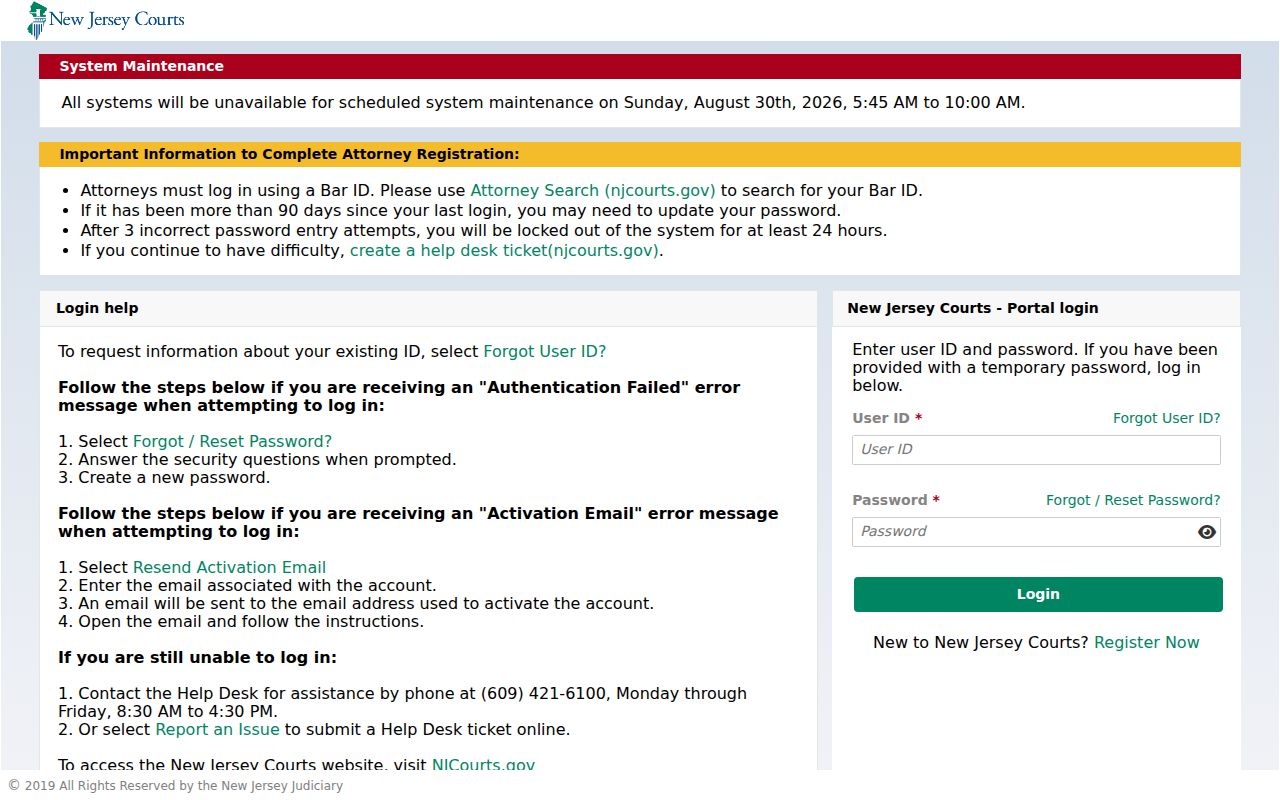
The entry screen is only a starting point. A docket hit can identify a case without making every filed document public online.
| Name | The party name returned by the search. Compare its spelling to the name variant you entered. |
|---|---|
| Venue | The court location or vicinage. It separates identical names appearing in different places. |
| Docket number | The case identifier to save before requesting a copy or asking a clerk about the matter. |
| Case caption | The formal case title, which can show the parties and whether the returned name is the intended party. |
| Initiation date | The date the case began. It is a needed date check when reviewing a common name. |
Insider tip. Search the longer usable part of a short name first. That respects eCourts’ exact-match rule and can reduce a false no-result without turning a court docket into an identity claim.
For an older, closed, image-only or restricted case, shift to the Hudson Vicinage, Superior Court Clerk’s Office or the Judiciary records-request route. Public-access terminals at a courthouse or clerk office may show more case-jacket metadata than the web search, but the research did not identify which extra Hudson fields are available. Confirm access and copy charges with the clerk rather than assuming an online image exists.
Verify a Hoboken Resident Lookup
Build a chain of matching facts, not a pile of name hits. A court docket proves that a party appeared in a case, while a parcel result may prove only ownership or a mailing address. A historical directory can place a name at an address for one printed year. Match the exact spelling, venue, docket, date, block/lot and record type before treating two results as the same person. This sequence uses sources with different purposes to make a careful identity check.
- Write down the full name, former or alternate surname, middle initial, likely city and known year.
- Run the party-name search, then save the result’s name, venue, docket number, case caption and initiation date.
- Test the address or property connection with NJ GIS or the assessor, then use AcclaimWeb for the grantee, grantor or legal-description trail.
- Check a Hoboken directory page and its image for a year-specific address, occupation or household notation. OCR alone is not enough.
- Use a permitted historical vital index, State Archives material or an eligible copy request only for the event being tested.
- Docket
- The court’s identifying case number and chronological case record. It must be paired with venue, caption and date when names are common.
- Index versus image
- An index points to a record with fields such as name or date. An image is the scanned page or filed document. An online docket can show metadata without the document image.
- Certified copy
- A custodian-issued copy made for legal use. New Jersey describes a vital-record certified copy as safety paper with a raised seal; an ordinary historical index is not the same thing.
Hoboken Directory Identity Checks
For a past resident, Hoboken DigiFind-It and the Hoboken Public Library’s Special Collections offer a useful second track. Search both the surname and the street. OCR can misread a surname or a street number, so preserve the year, part or page, the printed occupation, the address notation and adjacent entries. HPL lists directories on microfilm or online for 1902–1907 and 1909–1911, while DigiFind-It’s catalog shows many older items with gaps. An 1861–62 entry can carry a work address and an “h” home address, which are separate clues rather than proof of ownership.
For a longer address trail, use the Hoboken street directory to move from a parcel or number to the county records chain. Keep the page image alongside the transcription when an old abbreviation or address form matters.
Hoboken Vital Record Boundaries
New Jersey does not provide an open modern name-search database for birth, marriage and death certificates. Hoboken Vital Statistics can take local applications, while the state Office of Vital Statistics and Registry provides statewide copies. The State Archives is the historical fallback, holding births through 1924 and marriages and deaths through 1950. The modern state series begins with births in 1925 and marriages and deaths in 1951.
Recent access is restricted for births within 80 years, marriages within 50 years and deaths within 40 years. The requester’s relationship, identification and event details control whether the state can issue a certified copy, certification or No Record response. Use REG-28A and the Archives path for genealogy, and use the state’s vital-record order guidance for current application choices. Divorce is a Judiciary case or decree question, not an ordinary vital certificate search.
For an eligible state copy, documented channels include an online VitalChek order, mail, a local registrar and the walk-in state office in Trenton. The state also provides forms such as REG-27A for a non-genealogical certification or certified-copy request and REG-28A for a genealogical request. Hoboken Vital Statistics can route a local event application, but local timing and fees vary. Do not promise a certificate from an index hit alone.
Hoboken Voter Status Boundaries
The state’s “Am I Registered?” tool is an individual status route, not a block-by-block residents list. County spelling matters. A hyphen, space, former name, middle initial or nickname difference can cause a no-match in election services that require an exact county-record name. For voter-list questions, route the request to the proper election custodian under the applicable statute rather than attempting to build a roster from a status tool.
The official registration-check page is the state route for an individual voter-status check.
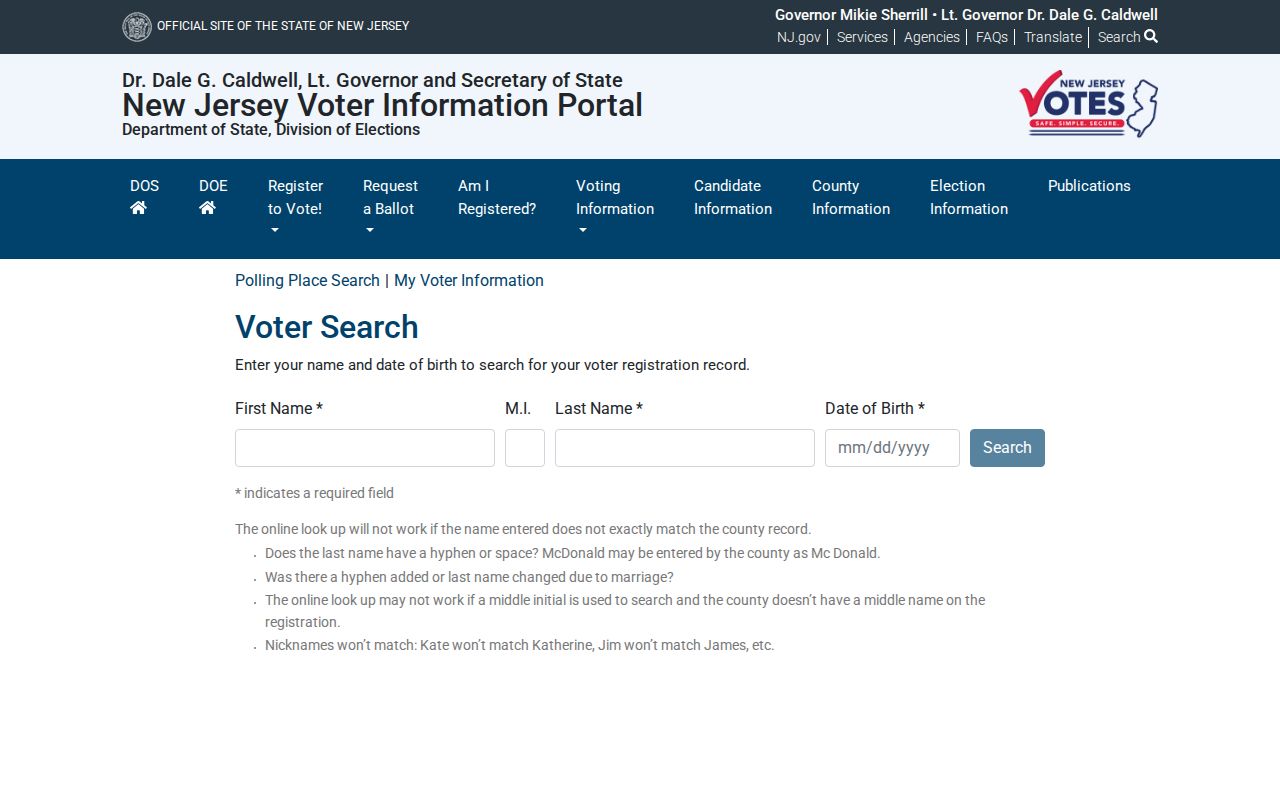
Public election material can include authorized registration information, but signatures, Social Security numbers and MVC identification numbers are protected. A ward or voting district is election geography, not a statement that someone currently lives at an address.
Hoboken Resident Lookup Role Myth
Myth: a property result names the person who lives there. The Hoboken Tax Assessor maintains owner, mailing-address and assessment context, and state parcel data can show a location, block and lot. Those roles differ. A grantee is a party on a recorded instrument; an owner appears in tax data; a mailing address may be elsewhere; an occupant requires separate, dated evidence. January-filed assessor data may also lag a later transfer.
Use the Hoboken Tax Assessor, NJ GIS and the Hudson Register together. Daniel’s Law can lawfully mask a protected name in a hosted parcel layer. A blank name is not a prompt to reconstruct the protected address from other sources.
The same limit applies to credentials. New Jersey’s notary lookup can search by last name, city, ZIP or commission ID and returns active commission information, city and ZIP. Consumer Affairs verification can confirm a person or business license by board or category. A commission or license is evidence of the state-authorized role shown, not evidence of a Hoboken home address or current practice at a particular location.
Hoboken Resident Lookup Limits
OPRA, N.J.S.A. 47:1A-1 et seq., allows access to many government records but does not make every record a person index. A written request goes to the right custodian and may be redacted, narrowed or handled in another format. Hoboken’s form offers pickup, mail, inspection, fax and email. County and city forms list standard copy rates of five cents per letter page and seven cents per legal page, with actual costs possible for postage, special service or unusual formats.
New Jersey’s Address Confidentiality Program supplies a substitute address for eligible survivors and certain reproductive-health patients or providers. Daniel’s Law can suppress identifying home-address information for covered officials and household members. Sealed, expunged, juvenile, adoption and confidential family matters are not ordinary public court-name search material. Ask for a particular docket, instrument, agenda or date range, not “all information” about a person.
Lawful use. Use records for family history, reconnecting, estate research or civic questions. Do not use a result to stalk, harass, threaten, impersonate or expose a protected person.
Hoboken Resident Lookup No-Results
A clean search can still be incomplete. A missing court result may reflect a wrong venue, a short-name exact match, sealing or portal coverage. A blank parcel name can reflect Daniel’s Law. A missing directory hit can be OCR, a skipped year or a changed address. Record the outcome as “not found in the searched source and date range,” then test a spelling variant, neighboring year, address form or the appropriate business-versus-individual search mode.
When the web stops, use the actual fallback chain: City Clerk or County OPRA for a defined government record, the assessor or Register for property evidence, an HPL appointment for historical material, the State Archives for older collections, and a court clerk or public terminal for case access. That wording preserves an honest limit and leaves the final verification with the custodian.